
Key Insights
Generative AI software development saves money, enhances work efficiency, and increases innovation. It allows launching products faster, automates repetitive codifying processes, better DevOps processes and also better collaboration among international teams. Companies enjoy quality codes, scalable acquisition of talent, and enhanced ability of retaining developers, as well as receiving data-based information to make strategic decisions. Nevertheless, the adoption should be responsible, and solid governance and ethical practices should be used to provide secure and bias-free AI solutions. Employing Generative AI today will see the companies acquire sustainable competitive advantage within the digital economy.

Firms that adopt generative AI in software development are positioning themselves to be at the frontline by 2025 and beyond and those that fail to do so are likely to end up being left behind.
According to a latest survey on the use of AI,
“Organizations are beginning to take actions that directly affect their profitability. For example, they are redesigning their work processes as they implement generative AI and appointing senior leaders to handle important areas such as AI governance.”
The emergence of generative AI such as GitHub Copilot and GPT-4 is changing the code development, testing, and documentation process of software teams by automating software development and utilization.
Also Read: Benefits and Perspectives of AI in Software Development
According to the recent statistics, 25 per cent of its code is now AI-assisted which demonstrates the effect of artificial intelligence on the development of software and minimization of manual labor. To business leaders, this translates to accelerated product deliveries, reduced cost of operation and responsiveness to the market.
The software development teams in 2025 are much different as compared to the teams that existed a few years ago. More integrated workflows are being provided by AI to personalities, thus traditional front-end, back-end, and QA are converging. Nowadays, developers are utilizing AI as a virtual team member, writing code using natural language or fixing bugs, and product managers and designers are using AI as a rapid prototyping tool.
Here, in this blog we will discuss team transformations, the use of generative AI in DevOps, and how it is resulting in measurable productivity. We will also discuss the risks and best practices to make the AI integration secure, ethical, and business-oriented.
To explore a complete implementation roadmap — from AI strategy and data preparation to scaling responsibly — read our 9 Step Guide on How to Use Generative AI for Your Business.
Generative AI in Software Development
- Enterprises with over $500 million in annual revenue are adopting generative AI more broadly across their organizations compared to smaller companies.
- 40% faster coding and 50% faster documentation with generative AI tools like GitHub Copilot and GPT-4.
- EY India Survey reported that GenAI could boost productivity in India’s IT industry by 43-45% over the next 5 years.
The Role of Generative AI in Software Development for Improving Teamwork

1. Accelerating Development Cycles for Faster Market Delivery
AI-powered software development reduces time taken to code, and teams can provide products amid a shorter time. Such tools as GitHub Copilot are able to create code snippets within seconds, reducing development time to as little as 90 percent depending on the complexity of the project. When applied to business, it creates accelerated launches and this is equivalent to millions of dollars in revenue since it becomes early entrants to the market. By enabling AI to automate repetitive work, the teams will stay on track as team members will now be able to focus on strategic matters like feature innovation.
2. Improving Junior Developer Productivity
Junior developers are empowered by AI for software teams, which lowers the onboarding expenses and decreases the speed of contribution. Juniors can generate 46% of their code on their own with the help of tools such as Tabnine which offer real-time suggestions and explanations of code. Companies enjoy rapid scaling of teams and new employees make a difference in just a few weeks, not months. This also reduces training expenses, since AI becomes a 24/7 mentor, and it is in line with business requirements of cost efficiency and agility.
3. Making the Code Reviews Smoother
AI for software teams identifies mistakes and proposes code optimizations in real-time, like Amazon CodeWhisperer which reduces the time needed to review code by almost 50 percent. Not only does this guarantee code of a higher quality but also enables software developers to do more high-impact, strategic work. For businesses, streamlined reviews mean fewer bugs in production, saving crucial time on post-release fixes. It also fosters collaborative discussions, aligning teams on quality standards without delays.
4. Bridging Remote and Hybrid Team Gaps
With one third of dev teams operating remotely, AI bridges communication gaps. Tools like Notion AI summarize async standups and generate shared documentation, reducing misalignments. Businesses see smoother global operations AI’s contextual suggestions ensure continuity across time zones, cutting project delays. This enhances stakeholder confidence in distributed delivery models.
5. Democratizing Expertise for Inclusive Teams
AI-powered software development reduces technical barriers, and lets different hires work more quickly. To businesses, this leads to inclusivity, and this accesses larger pools of talent and saves hiring expenses. Multicultural teams also enhance innovation, which is aligned with market pressures to come up with creative solutions.
6. Making DevOps Cost-Effective
As observed in the case of generative AI in DevOps with Spotify whereby new infrastructure tests and anomalies prediction were automated, thus reducing the infrastructure cost by 60 percent. Such tools as SonarQube contribute to better CI/CD pipelines, which guarantee quality releases. This reduces downtime and speed of iteration, which have direct impacts on customer satisfaction and other key customer retention metrics used to position businesses competitively.
7. Enabling Cross-Functional Teamwork
AI builds synergy between the requirements, developers, and QA through the generation of UI prototypes and test cases based on the requirements. This helps cut friction and has reduced misalignment in cross-functional projects. In the case of businesses, this can be seen to mean coordinated development of products such that features are based on the needs of customers and the rework costs are minimized.
8. Mitigating Burnout to Sustainable Performance
AI increases the satisfaction of developers as it automates tedious activities such as documentation. This leads to lower turnover which is a sensitive business issue because it takes 1.5 times to replace a competent employee. Companies with happier employees can provide a stable output and this helps in ensuring long term stability as well as predictability of the projects.
9. Mitigating Risks with Ethical AI Governance
Security and IP risks are real because most of the AI-generated code contains vulnerabilities. Governance frameworks, adopted teams mandate human reviews and ethical training, minimizing liabilities. To businesses, this guarantees that they abide by the regulations such as the EU AI Act, avoid fines and develop trust with stakeholders.
10. Introducing Agents to Drive Innovation
Autonomous AI agents, coming into existence in 2025, process end-to-end workflows, including coding to deployment. This liberates teams to high-value innovation, and the uplift in revenues of AI-enhanced products. Businesses gain a first-mover advantage, as teams pivot to strategic experimentation, aligning with C-suite goals of market leadership.
Also Read: AI Agents: A Guide to the Future of Intelligent Support
The AI Tools Software Teams Must Have in 2025
With generative AI in software development becoming mainstream, a sample of the correct tools can be used to give your team an objective advantage. Training talent, enhancing quality, and speeding up delivery? These AI based systems are changing the way development teams work.
Below is a breakdown of the most influential AI applications that are expected to influence software processes in 2025:
1. GitHub Copilot
GitHub Copilot is a code assistant developed by GitHub and OpenAI and is powered by AI. It ideally completes code, writes entire functions, and interprets logic in real-time all in your preferred IDEs such as VS Code or JetBrains.
Why It Matters for Teams:
- Contextual suggestions allow new developers to give their contributions in a meaningful way just within a few days.
- The senior devs also save time on repetitive code and are able to work on architecture and on complex problems.
- Produces snippets for languages like Python, JavaScript, and Java, with 46% of Java developers’ code generated autonomously.
Use Case:
The fast-onboarding of junior developers and ensuring that the code of a growing team is always written in a similar way.
How to Implement?
Teach your staff about the fundamentals of instant software development. In addition, combine it with GitHub Action to make the CI/CD pipelines more smooth.
2. Amazon CodeWhisperer
Amazon CodeWhisperer specializes in generating secure, AWS-optimized code. It flags potential vulnerabilities as developers type, promoting safe coding practices.
Why It Matters for Teams:
- Builds IAM policies, Lambda functions, and other AWS components with security-first design.
- Early preparation of problems in the dev lifecycle- minimizes the price of post-release bug fixing.
- Integrates smoothly with AWS Cloud9 and any other IDE such as IntelliJ or VS Code.
Use Case:
Enterprise development teams operating in the cloud-native setting with a high level of compliance and security.
How to Implement?
CodeWhisperer should be used together with AWS CodePipeline or CloudFormation as an Infrastructure as Code (IaC) tool. Set up role-based access to control where AI-suggested code gets deployed.
3. Tabnine
Tabnine is a privacy-first AI assistant that generates intelligent code completions using models trained on your team’s private repositories.
Why It Matters for Teams:
- On-site makes team-related recommendations, and traditionalizes to internal nomenclature and coding formats.
- Stores all data in-premise or in a secret cloud, which suits controlled industries.
- Accelerates code production without sacrificing team preferences or exposing sensitive logic.
Use Case:
Startups, fintech companies, and enterprise teams that require tight control over proprietary code and data privacy.
How to Implement?
Train Tabnine on your internal codebase and pair it with Slack or Microsoft Teams for real-time discussions and mentorship around code logic.
4. Atlassian Rovo
Rovo is a generative AI tool within the Atlassian ecosystem that automates user story generation, sprint planning, and retrospective summaries.
Why It Matters for Teams:
- Turn vague requests of clients into structured backlog.
- Helps scrum masters and product managers cut back on preparation of sprints.
- Produces well-structured recaps of sprint retrospectives having actionable insights.
Use Case:
Agile product teams with fast iteration cycles who need to stay aligned on goals and execution.
How to Implement?
Enable automatic sharing of Rovo’s outputs in Jira, Trello, or Confluence so that developers, designers, and business stakeholders are always on the same page. Rovo helps eliminate ambiguity between “what’s required” and “what gets built.”
5. Testim
Testim uses generative AI to create automated test cases based on user stories or UI flows. It also enables continuous regression testing with smart updates.
Why It Matters for Teams:
- QA engineers spend less time writing manual scripts and more time on exploratory testing.
- Test cases evolve alongside your product, reducing the risk of stale automation.
- Facilitates the adoption of a culture of testing early in the cycle catching bugs.
Use Case:
QA and Dev Ops teams who desire to cover wider, however less manual work and post release failures.
How to Implement?
TIE Testim to your CI/CD stack (e.g., Jenkins, GitHub Actions) to have real-time feedback loops. Detect flaky tests using the inbuilt analytics and maximize the reliability of the tests across sprints.
6. Google Gemini 2.5
Google Gemini 2.5 is a multimodal, code-first AI that builds backend services, handles data integration, and explains complex logic using natural language.
Why It Matters for Teams:
- Generates scalable RESTful APIs and database connectors.
- Easy to use in teams that require bridging between different systems and streamline the back-end infrastructure.
- Explains things in simple English- ideal with cross-functional teams.
Use Case:
Mid-size to enterprise-level engineering teams managing real-time data pipelines or scalable APIs.
How to Implement?
Combine Gemini with Google Cloud platform (GCP) to deploy in high performance mode. Test your staff by training them to prove and document the logic of the AI with the help of postman or swagger to facilitate the process of handing over the API.
7. Grok by xAI
Grok is a conversational, multimodal AI developed by xAI (Elon Musk’s AI venture) that supports text, code, and UI generation. It’s available via web, Slack, and mobile apps.
Why It Matters for Teams:
- Converts Figma files directly into React, Vue, or HTML/CSS code.
- Summarizes product requirements and pushes updates across channels.
- Enables async discussions via voice mode, supporting distributed teams.
Use Case
Cross-functional teams working on tight design-to-dev handoffs, especially in UX-heavy or startup environments.
How to Implement?
Use Grok alongside Figma, Notion, and Slack for a seamless product design–to–code pipeline. The voice mode is especially useful for async product updates in remote settings.
Also Read: 9 Step Guide on How to Use Generative AI for Your Business
10 Risks of Generative AI in Software Development

Here, we identify 10 of the most significant issues and threats of generative AI application to software development teams and detail them in relation to business outcomes and the impact they have on the team-building process.
1. Automation of Expertise Making Teams Obsolete: Excessive dependence on artificial intelligence tools such as GitHub Copilot is the risk of losing skills and undermining the major principles of writing and coding. This undermines the capability of teams in the long term and raises the cost of hiring highly skilled talent. It makes innovation less productive as the teams cannot solve complex challenges without AI assistance.
2. Loss of Trust in AI Performance: 46 percent of developers do not trust the accuracy of the outputs of AI tools in any way. Its burdensome reviews increase the project timelines and the team lacks cohesiveness as it also loses trust over the capacity to deliver together to them affecting time-to-market.
3. Ethical and Bias Risks Dangerous Reputation: Biased AI trained on biased data may cause inequities to code or ability, which may result in consumer backlash or regulatory penalties under laws such as the EU AI Act. Such instances may negatively affect brand loyalty of customers, who are not interested to cooperate with such corporations, which practice unethical artificial intelligence. Moral conflicts within the team are likely to destroy the culture of collaboration.
4. Workflow Integration Cost and Disruptions: Integrating AI into legacy systems may be expensive and take a long time to up to $500,000 to set up and results in workflow disruptions. These technical reflexes lower team performance at the adoption stages and slows ROI and friction in cross-functional teamwork.
5. Weak Security: AI code-generation may have vulnerabilities and will need corrections. This requires the expensive industry audits, increased post-release fix costs, as well as compromising the momentum and collaboration focus on innovation with the damage control, and putting businesses at risk of cyber attacks.
6. Shortage of Talent: The lack of AI-skilled developers makes developers reliant on a small number of specialists, and raises salaries. Even distribution of skill in teams forms bottlenecks and reduces the output of collaborations and further increases the project costs as the businesses compete to employ or train them at the expense of strategic projects.
7. Absence of AI Transparency to Prevent Accountability: AI operations are not visible, and thus, it might be difficult to track and trace errors or hold someone responsible, and hence blame-shifting will occur within the team and demoralize. This kind of ambiguity is dangerous to the project delays and loss of stakeholder confidence, which has implications to business credibility and schedules.
8. Cultural Resistance Impacting Adoption ROI: Resistance to AI, driven by unclear roles, creates silos and power struggles of teams reporting adoption hesitancy. This reduces the speed of integration, latency of productivity increases, and businesses can lose up to 10 percent of the estimated AI ROI as teams fail to agree on common objectives.
9. Technical Debt Accumulating Hidden Costs: Technical debt is created through AI rapid coding that is not carefully validated. This diverts team resources from innovation to rework, raising long-term costs and stifling collaborative creativity critical for market differentiation.
10. Workforce Training Gaps Raising Turnover: Inadequate AI training leaves teams unprepared, with higher turnover in undertrained groups. Replacing developers strain budgets and disrupts team synergy, as businesses lose collaborative expertise and face delays in project execution.
Business Mitigation Strategies
In order to realize the full potential of generative AI in the software development process and overcome its obstacles, companies will need to take a strategic solution so that their teams can be efficient, compliant, and innovative. Use the following main mitigation measures:
Invest in Full AI Literacy Programs.
Invest in AI literacy as a competitive strategy to avoid skill loss, reduce turnover, and continue innovation by investing 5-10% IT budgets.
Introduce Human-in-the-Loop Governance Structures
Implement human-level reviews of AI code, vulnerability reduction, compliance and post-release fix cost reductions (20-30).
Pilot Programs of Low-Risk AI Integration
Implement AI tools through pilot projects to minimize the resistance to adoption, workflow exacerbation, and 25% cut integration costs.
Carry Out Periodical Ethical Reviews and Prejudice Tests
Carry out quarterly audits to reduce bias, adhere to the ethics, safeguard reputation, and avoid consumer backlash or even regulatory fines.
Create Standards of Analogous AI Ownership and Role
Role and responsibility definition in the context of AI to reduce cultural resistance, minimize silos, and enhance collaboration by 15 percent.
Top 5 AI Development Trends for 2025

- Domain-specific foundation models are emerging to deliver higher accuracy and compliance in specialized industries.
- Multimodal Gen AI is enabling seamless input and output across text, image, audio, and video.
- RAG pipelines are reducing hallucinations by grounding AI outputs in real-time, company-specific data.
- Autonomous AI agents are automating complex tasks through reasoning, planning and acting with tools on their own.
- On-device and privacy friendly AI is on the rise, which allows fast, secure and offline smartness without access to the cloud.
Final Thoughts
Generative AI in software development is not necessarily concerned with writing better and faster code, but also with changing the way teams work. Whether it is involving the streamfitting of DevOps, providing power to junior developers, or preventing burnout, AI is turning out to be a trusted co-worker that inspires productivity, collaboration, and creativity.
Those businesses that thrive in 2025 and above will be those who strike a balance between the speed of AI and human control. This implies using the appropriate tools, implementing a system of governance, and investing in upskilling such that teams are not intimidated by the implementation of AI. The future is not about humans or AI, it is about human and AI collaborating to produce superior products, improved teams, and impactful business.
FAQs
Q1: In what way does Generative AI help software teams to save money?
Repetitive work, e.g., boilerplate code, documentation, and testing, is automated by generative AI, and developers are able to put their effort into higher-value work. This saves up to 30% of operation expenses per annum.
Q2: Will AI fully replace developers in the future?
No. AI is a productivity partner and not a replacement. Strategies, system design and supervision are vital in human beings. AI copes with monotonous tasks allowing the teams to work on innovation.
Q3: What methods do businesses implement to quantify ROI of AI adoption?
Key metrics include:
- Shorter time-to-market
- Reduced rates of defects and support
- Greater availability of developers
- Increased retention and satisfaction of employees
Q4: What are some security issues of AI-generated code?
- Risk of potential vulnerabilities
- Intellectual property and licensing
- Risks of data privacy compliance
Q5: What are the methods a company can begin to use Generative AI?
- Single out the areas with high impact such as testing, documentation and DevOps.
- Begin with small pilot projects.
- Educate the use of AI and best practices by the train teams.
How BrainX Technologies Empowers Businesses?
At BrainX Technologies, we partner with organizations to strategically integrate Generative AI in software development.
Our services include:
- AI-Enhanced Development: Incorporating AI assistants in code development.
- Integrating Generative AI in DevOps: Automating CI/CD, infrastructure and monitoring.
- Custom AI Solutions: Developing business-specific models.
- Governance, Compliance & Consulting: Establishing safe, ethical AI practices.
Our implementation does not merely put the tools to work, but changes the very culture of your team so that Generative AI software development becomes a steady ally that is going to bring tangible business growth.
Ready to future-proof your software teams?

Intelligent, scalable and 24-hour support provided by businesses is being changed by AI agents. These customer support agents are based on large language models and automation, which can directly respond to customer inquiries and, as well as, process customer inquiries through faster resolution times, better customer satisfaction, and operational efficiency. This guide clearly describes the nature of AI agents, their main functionalities, practical application in the industry and how they are transforming smart assistance by 2025 and beyond.
AI agents are self-managing, autonomous, intelligent beings able to reason, adjust, and make decisions instantaneously.
“35% of companies report broad adoption of AI agents, while 17% indicate that AI agents are now fully integrated across nearly all workflows and functions.”
Whether it is the customer service revolution to simplification of complex tasks, these agents are no longer a far stretched dream. In the future these agents are already predicted to transform the industries and change what is considered productive. This authoritative book takes an in-depth look at the nature of AI agents, their functionality, their use in the real world, and what we should expect in the future so that you are no longer at a disadvantage when it comes to exploiting this technology disruptor.
What Are AI Agents?

AI agents are computer programs fuelled by artificial intelligence and designed to carry out tasks autonomously, make decisions or correspond with a user/system, to accomplish a given objective.
Contrary to more traditional approaches to chatbots that use pre-written responses (i.e., continue to respond in scripted ways), or robotic process automation (RPA), whose behavior is governed by strict rules, AI agents apply machine learning (ML), natural language processing (NLP), and large language models (LLM) to dynamically learn new information.
They are aware of the surroundings, process complicated situations, and have the ability to autonomously respond to situations, thereby making them an interpolatable business tool.
Namely, although a chatbot may have a hard time dealing with a sophisticated customer request, an AI agent will be able to make an intent analysis, consult knowledge base, and make a specific response, or even transfer the issue to a human agent, having provided all the context. In fact, the MarketsandMarkets report predicts that the AI agents market will also rise in value, reaching a mark of 47.1 billion dollars by 2030, which shows their huge potential.
Key Components of AI Agents
AI agents are built on several core components that enable their autonomy and intelligence:
1. Perception: Agents collect data from their environment, such as customer queries, database records, or IoT sensor inputs.
2. Reasoning: Agents analyze, interpret, and make decisions using machine learning models and large language models.
3. Action: Agents perform actions, to answer questions, to automate processes, or to cause updates to the system.
4. Memory: A long-term memory means that the agent stores user preferences, previous interactions or results of a task and uses this knowledge to perform better in future.
5. Learning: The agents can also gradually perfect behavior based on feedback loop and reinforcement learning.
These are the aspects that make AI agents different to traditional automation allowing it to react to dynamic and unpredictable environments.
How AI Agents Work?

AI agents operate in a continuous loop of sensing, analyzing, and acting.
- Inputs: Provides access to the query as a text, voice or other method.
- Interpret: Through NLP, is able to interpret intent and sentiment with a knowledge base and backend systems being cross-referenced.
- Makes Decisions: Decides to take an action, escalate to a human or activate an automated work flow.
- Executes: Demonstrates an action, response, or execution of task, e.g. an upgrade of a CRM system.
- Learns: Memorizes the conversation to allow better responses in the future.
This is the work provided by innovative AI, such as LLMs, like those of ChatGPT. It allows working with natural language; and APIs or databases, through which real-time guidance will be available.
Types of AI Agents
AI agents are generally classified into five main types: simple reflex agents, model-based reflex agents, goal-based agents, utility-based agents, and learning agents. Such agents vary in the way they perceive the environment, adjust to this or that change, and decision-making.
Let us sort out these types one by one:
1. Simple Reflex Agents: These are the most simple class, which purely exists as per the input stimulus (current perception) according to pre-decided rules and do not take past experiences or future outcomes into account when making decisions.
An example is a smart thermostat that switches the heater on or off depending on the room’s current temperature.
2. Model-Based Reflex Agents: These agents depend on an internalized model of the environment, and thus they are able to keep track of the current state and its time-dependent transition. This knowledge will assist them in making better and contextual decisions.
For example, a robot that bases its movements to follow an existing map of the immediate area, although it is outdated to some extent.
3. Goal-Based Agents: These are agents that perform an action in an attempt to reach a certain goal.
Example: An AI that plays chess and considers the state of the game and makes some decisions, winning the game through the checkmate.
4. Utility-Based Agents: These agents go beyond simply achieving a goal, they also evaluate the desirability or utility of possible outcomes and choose the action that maximizes overall benefit or satisfaction.
Example: A portfolio management agent which looks at stocks balancing risk and reward to give maximum returns.
5. Learning Agents: These kinds of agents are able to learn on the basis of past things and enhance their performance requirements in the future.
Example: A spam filter that would learn to distinguish between spam and non-spam mails depending on the statements of the user.
6. Hierarchical Agents: Such agents structure their decision making process in terms of levels of abstraction and the higher level agent directs the lower level agent in the process.
7. Multi-Agent Systems: These are systems of multiple AI agents which interact, and perhaps co-operate to reach a shared goal.
Real-World Examples of AI Agents
AI agents are already generating tangible results across a wide range of industries. Here are some compelling examples:
1. TaskRabbit’s Customer Service Revolution
An online marketplace, TaskRabbit, specializing in matching freelancers with local demand had to deal with its customer service tickets increasing by 60 percent to 158,000 per month. What TaskRabbit did was automate answers to frequently asked questions by using Zendesk AI agents.
Resultantly, it moved to a higher customer satisfaction level and grew support without hiring more people. These agents could identify the intent of the customers, tap into the knowledge banks of the business and fix problems without any human intervention to reach a level of 30 percent automation.
2. Domo’s Marketing Workflow Automation
A marketing team using Domo’s Agent Catalyst built an AI agent to automate follow-ups for weekly strategy meetings. Previously, team members spent hours transcribing notes and emailing summaries.
The agent now transcribes, identifies action items, and sends personalized emails, saving hours weekly and improving accountability. This no-code solution highlights how AI agents democratize automation for non-technical users.
3. Gumloop’s Revenue Surge
Gumloop, a no-code AI automation platform, helped a business generate 65% more meetings year-over-year and win 207% more revenue by deploying AI agents to automate outreach and scheduling. The intuitive UI allowed non-developers to create workflows, showcasing the accessibility of AI agents.
4. Zapier’s Lead Generation
Zapier’s AI agents automated lead generation, producing over 2,000 leads in a single month. Integrated with 7,000+ apps, these agents handled tasks like data enrichment and CRM updates, allowing teams to focus on strategic priorities.
Benefits of AI Agents
The following are the revolutionary advantages of AI agents to businesses, staff and customers:
1. Improved Productivity
Repetitive tasks often lengthen the process required to accomplish an objective with the involvement of a human workforce. AI agents can simplify performing high-value tasks for the teams by automating them. To give an example, Zendesk AI agents can reach a cumulative 80 percent automation level of customer requests, saving on manual work.
2. 24/7 Support
There is round the clock support by the use of Agents, so customers get immediate help no matter the time zone.
3. Personalization
The agents access customer data and provide personalized answers to them by connecting with other backend systems that enhance customer satisfaction.
4. Cost of Operating
Automation reduces the amount of money spent in the operations. According to a recent survey by LangChain, 51% of companies are using AI agents to make data-backed decisions and reduce resource waste.
5. Scalability
Agents handle surging demand without additional staffing, as seen in TaskRabbit’s case.
6. Actionable Insights
Agents analyze interactions to identify trends, enabling proactive improvements.
7. Multi-Channel Consistency
AI agents have the ability to work on multiple channels such as email, social media or voice to provide consistent and coherent service.
8. Continuous Learning and Self-Proficiency
Most AI agents are expected to learn from user’s conversations or contextual knowledge and understanding.
9. Localization and Multilingual Support
Localization and multilingual support becomes a breeze as AI agents are modeled to converse in different languages; therefore, businesses with multilingual customers no longer have to employ multilingual staff just to maintain them.
10. Data Privacy and Compliance Monitoring
The contemporary AI agents can be programmed to comply with the regulations (such as GDPR or HIPAA). It guarantees that customer information is handled safely and in line with the laws.
Challenges and Limitations
Although AI agents are powerful, there are challenges that should be overcome by the businesses, such as:
- The lack of Empathy: Agents might not be able to deal with emotionally sensitive situations and might need human escalation.
- Complex Queries: Complex queries that are unseen during training that are subtle or unique may produce an error.
- Privacy: The processing of sensitive data requires strong security proofs such as encryption and GDPR to be adhered to.
- Over-dependence: This danger is inherent in too heavy use of agents as it will tend to make human skills obsolete.
- Hallucination Possibility: There is a risk of poor answers that LLMs can produce, which requires monitoring and guard rails.
End to End Steps to Create AI Agents
Developing an AI agent has never been easier because of no-code/low-code software tools such as Domo, Gumloop, and Zapier. Here’s our tried-and-tested step-by-step guide to building an AI agent for greater clarity and ease of use.
1. Define Objectives: Define Issues, like automation of customer support or the analysis of the data. Prepare defined objectives, such as cutting down on response time by 50 percent.
2. Select a platform: Select a tool such as Domo no-code workflows or n8n developer. It should have compatibility with your systems.
3. Design Workflow: Diagram the work flow of an agent including queries on a database or sending emails. No-code platforms make use of visual editors for building workflows and functionalities.
4. Setup Data Sources: Link the agent to knowledge bases, CRMs or APIs to have the ability to access real time data.
5. Fine-Tune the Model: Refine the model using domain-specific data to enhance its accuracy and performance.
6. Test and Iterate: Test and repeat to find out mistakes. Follow productivity measures such as precision and customer satisfaction.
7. Deploy and Monitor: Deploy the agent and utilize analytics to monitor the performance, and polish it accordingly.
The Future of AI Agents

The prospects of AI agents will face towards a promising future and it will have greater effects:
- Emotional Intelligence: The agents will be more likely to recognize and deal with human emotions to improve the mental support or customer experience.
- Multimodal Capabilities: The text, voice, images and video will all be integrated so as to facilitate richer interaction, including visual troubleshooting.
- IoT Integration: Smart devices will be under the control of agents, optimizing homes, cities and offices.
- Multi-Agent Collaboration: Groups of agents will solve complex tasks so that one of them may be specialized in data analysis or the process of communication.
- Ethical Design: Responsible AI will lay emphasis on being fair, minimizing the biases, and being compliant.
- Generative AI: CloudMoyo anticipates that 80 percent of enterprises will have deployed generative AI-enabled applications inclusive of agentic AI by the year 2026.
How to Implement AI Agents in Your Business?
The following best practices can be employed to have the best chances of adopting AI agents:
1. Start Small: To get started, do one use case, such as automating FAQs, test and learn.
2. Know Security: Encrypt data and apply restrictions to access.
3. Train Staff: Teams should be trained on how to work with agents to the greatest extent.
4. Measure Performance: Display analytics to help monitor performance and resolve problems such as hallucinations.
5. Gradually Upscale: To grow into new use cases by building confidence.
AI Agents vs. Traditional Automation
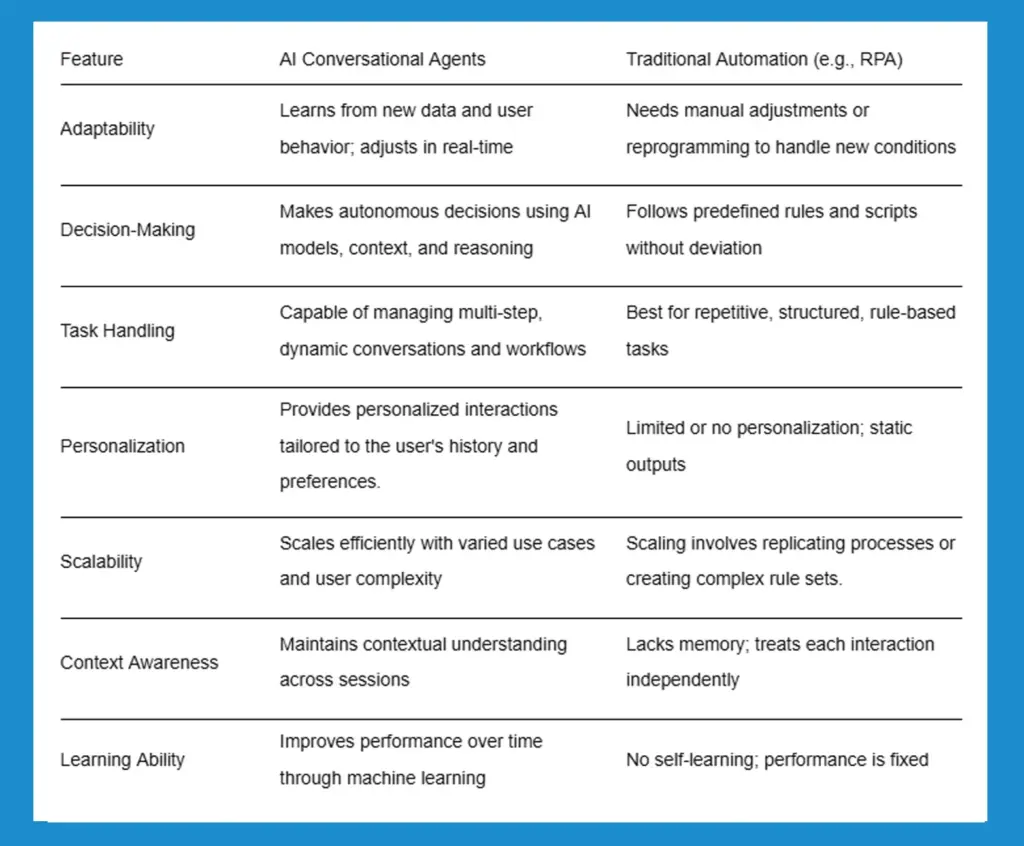
AI agents differ significantly from traditional automation:
Dealing with heavy work burden or slow response duration?
When your customers have to spend too much time without assistance, or when your team is overloaded, it is time to re-engineer the process of work. At BrainX, we are experts in creating AI agents that directly address these business challenges.
Our AI development services help you automate repetitive tasks, provide quick responses, and work 24/7 without having to burn out. We provide assistance tailored to your business requirements, so they grow as you grow, and free up your team to do what really counts.
Together we can eliminate the bottlenecks.
Talk to BrainX about building an AI agent that actually moves the needle!
FAQs
1. What is an AI agent in customer support?
A software-based assistant, an AI agent applies artificial intelligence (particularly NLP and machine learning) to tasks such as question answering, ticket routing, problem solving and personal assistance – commonly real time and at scale.
2. What is the efficiency of AI agents in terms of support?
Artificial intelligence agents minimize the amount of time taken to respond, respond to monotonous questions, and they work 24/7 without fatigue. This increases the response rates in the first-response and also leaves human teams to high complexity tasks.
3. Are chatbots equivalent to AI support agents?
Not exactly. Although the two can communicate with the users, AI agents are more developed. They apply contextual knowledge, recollection and autonomous choice- usually combined with CRMs, databases and APIs.
4. What industries are the most efficient with the use of AI support agents?
The industries that have benefited most include eCommerce, SaaS, healthcare, real estate, and logistics- anywhere customer interaction, ticketing or process automation is required.
5. Are AI agents able to substitute human support teams?
No. AI agents do not substitute human agents, but complete them. They are dealing with routine tasks, pushing the complex ones to humans, and making sure that costs are saved and user experiences are improved.

Your customers use their phones daily, swiping across their apps that already know what they need and what their problems may be and how these apps can help them and improve their life. However in the current world where there are over 8.93 million mobile apps competing to get the attention of the audience, a design alone is not sufficient to cut through the competition, intelligence is needed. Branded by artificial intelligence (AI), mobile apps are becoming the most useful tools ever as they attract users in a new way.
Whether it be real-time support through chat bots or hyper-personalization that is like a personal concierge, artificial intelligence can be found supporting businesses like yours in becoming even more interactive, efficient in their operations, and of developing long term loyalty. This blog will talk about the revolutionary aspect of AI in mobile applications and how it is time that business owners adopt this technology.
The Rise of AI in Mobile Apps: Why It Matters to You

The mobile app market is a very competitive one, and Google Play and the App Store have millions of apps on it. Customers demand a flawless, easy-to-grasp, and personalized experience, and AI is the solution to achieving such a behavior.
According to a recent report, it has been estimated that the worldwide AI market is worth about 391 billion dollars. To all the entrepreneurs, this is not a disclosure, it is a strategic advantage that allows you to stand out and stimulate your growth.
AI in mobile apps enables them to think, learn, and adapt as it adopts tools like natural language processing (NLP) to make smarter conversations, machine learning (ML) to make predictions by offering an understanding, and computer vision, which is used to make visual innovations.
Why is AI in mobile apps the key to staying ahead in 2026? Let us have a look.
1. Chatbots
Traditional chatbots that used to lag and frustrate the customers have become a thing of the past. The already present AI-powered chatbots are powered by NLP and ML, which comprehend the contextual meaning, identify emotions, and offer immediate, personalized assistance. To the entrepreneurs this implies the ability to give the customer outstanding customer service that you do not have at the expense of an in-house team.
The Significance of Chatbots
Interesting fact: In the modern world, the number of individuals who refer to AI chatbots exceeds 987 million.
These chatbots respond to FAQs, place orders, and do all the other simple tasks, leaving the complex tasks to human agents and promising 24-hours service.
Case Study: Sephora’s Virtual Assistant
The mobile application of Sephora will include an AI-based chatbot, which is combined with NLP and provides customers with personal product and beauty talk that aligns with their preferences and buying habits. It even appoints meetings in a store. The result? Demonstrating that chatbots can be used to generate anything up to 20 percent growth when it comes to engagement with customers along with 15 percent increase in conversion rates.
There is more to Customer Service
Chatbots have taken businesses by storm. There is also use of AI in the healthcare industry, with applications such as Ada Health helping to evaluate symptoms and offer individual guidance, with the help of the former offloading part of the workload of personnel. Banking uses chatbots in apps, such as Chase Mobile, and provides information quickly to answer transaction questions. A chatbot may shorten response times, raise satisfaction and lower operation costs to your business.
2. Hyper-Personalisation
Hyper-personalization is the further step of personalization, relying on AI to individualize experience on an app as per user behavior and preferences in real-time. It is equivalent to a digital assistant that knows perfectly what your customers need.
Power of Hyper-Personalization
According to the study conducted by the Harvard Business Review in 2024, personalized user experience can have a five to eightfold effect on the number of marketing investments. Such apps as Netflix and Spotify lead by example: the Netflix recommendation engine designed around ML and Spotify Discover Weekly playlists have contributed to 80 percent of Netflix watch time, and have improved Spotify retention 30 percent by recommending appropriate songs.
Case Study: Starbucks Mobile App
The Starbucks application relies on AI that examines the previous buying history, location, and even weather to recommend drinks and meals. It may suggest a hot latte drink to a user who would only want to drink warm drinks on a cold morning. This hyper-personalization has resulted in a 25 percent rise in app-based orders and a 10 percent increment in the determination of loyalty programs.
The Advantage It Has to Your Business
Hyper-personalization greatly adds to customer engagement and retention. Using predictive analytics, your app can meet the customer demands by recommending products, publishing content, or providing notification that comes at the right time. It can be a fitness app that suggests exercises to do or an e-commerce app that mentions deals: regardless of the industry, the personalized experience will make users return.
3. Predictive Analytics
With predictive analytics driven by ML, developers can use the past data to predict user actions so that apps can provide them with proactive solutions. In this, business owners end up making smarter marketing and decisions.
Real-World Impact
According to a survey done by Qualtrics in 2025, predictive analytics results in a 15 percent growth in customer retention for businesses. Another example is Amazon positioning their mobile app so it guesses what users are likely to purchase next, generating a 35 percent growth in average order size based on recommendations.
Case Study: MyFitnessPal
MyFitnessPal employs predictive analytics to provide their users custom workout programs, and meal recommendations depending on activity rates and objectives. As a result of this, there has been a 28 percent increased usage and 20 percent more premium memberships, which demonstrates how AI enhances satisfaction and revenue.
How Does It Matter to You?
Predictive analytics will allow your company to understand what is soon to come and be ahead of it. A shopping app may remind customers of an item they need to buy again, or a travel app may suggest a place, depending on their previous travels. These qualities are not only less abrasive but also turn your application into a must have.
4. Computer Vision
With computer vision, applications can process visual data, anything as basic as determining the object in front of them to understand gestures which would change the face of retailing, medical care, and entertainment.
The Example of Google Lens
The Google app includes Google Lens, which can scan objects with computer vision and display details about the object immediately, such as the names of plants or translation of menus. It has stimulated an increment on the use of apps by 40 percent. Computer vision technology empowers businesses with capabilities such as virtual try-ons for retail and automated document capture for finance or logistics.
Case study: IKEA Place
The Place app of IKEA incorporates computer vision, augmented reality (AR) to allow users to create home visualizations with furniture. It also guarantees proper placements with its ability to analyze the dimensions of the room and lighting in order to boost online furniture sales by 30%.
The Reason It Is a Game-changer
Computer vision brings in a new source of revenue. A fashion application may allow trial room usage with the aim of reducing returns or a property application may allow virtual tours with the aim of saving time. These functionalities make your brand easy to implement and customer oriented.
5. Voice Assistants
NLP-based voice assistants enable wider access and ease in using apps to accommodate a hands-free multi-task environment or visually impaired users.
Story in Numbers
According to a survey conducted by Emerline in 2025, applications that have voice recognition have a 25 percent heightened engagement. Such assistants can perform various activities like setting reminders or ordering something, which makes apps user-friendly.
Case Study: Domino Case Study
Domino has an app with a voice assistant named Dom that takes orders of pizza through natural speech. This has shown a 15 percent growth in app order, 10 percent decline in phone calls to customer services.
Why Should You Care?
Voice assistants make communication easier and increase the number of people who can use your app. A food delivery app may accept voice orders or a work aids application may enable dictation of notes, thereby making it more inclusive and friendly to its users.
6. Security and Fraud Detection
As the threats to data privacy are on the increase, AI can improve app security with fraud identification using machine learning and biometric logins by face recognition or voice.
Case Study: PayPal
PayPal app is powered by AI, as it tracks transactions in real-time, and notices suspicious activities. It has decreased fraudulent transactions by 25 percent and made users more trusting since 70 percent of users regard this application as being secure.
The Significance to Your Business
Artificial intelligent security instigates trust and loyalty. Protecting the data of the users whether you own a fintech or an e-commerce app will save millions in possible fraudulent expenses.
Examples of Businesses That Integrated AI in Mobile Apps
Many mobile apps that were not originally built around artificial intelligence have started integrating AI in mobile apps to enhance user experience, improve functionality, and stay competitive. Some of the examples of these apps, whose existence is discussed based on information available, are listed below that have integrated AI in their existing models:
1. WhatsApp
AI Functionality Introduced: In 2025, WhatsApp started experimenting with AI product recommendations and introduced an AI-powered business voice calling feature, which allowed more dynamic and dynamic customer care experience. As an illustration, AI helps businesses recommend products depending on user activities.
2. The Premier League App
The app included AI-based tools based on Microsoft Copilot, including match analysis functions, individualized guidance, or recounting an occurrence of game play. The tools allow the user to experience the game in a better way through interaction with match statistics and predictions.
3. Snapchat
Snapchat has intimated their iconic filters into the AI-powered image recognition technology, to add effects to their iconic filters through facial recognition in real-time. Also, it launched My AI chatbot that enabled the user to communicate naturally through the app and get questions answered or help in something.
4. Netflix
Netflix takes advantage of AI-powered personalization enabling it to recommend programmes and movies depending on previous viewings of a user. Its algorithm studies how its users consume it to recommend it, and about 80 percent of users end up watching suggested titles. Also, Netflix has been considering AI voice-activated search and content categorization.
5. Google Photos
Deep Scan App also uses the AI in image recognition to classify photos automatically and identify the people, places, or things it sees. The AI is used to provide such features as automatic tagging, facial recognition, and search (e.g. searching by “beach” to find photos related to this search query).
6. Hootsuite
Hootsuite insights is an AI technology that reads social media sentiment and trends and provides content suggestions based on how the user interacted with their stories. Automated post-scheduling is also fuelled by AI to maximize their impact in their timings.
What Can the AI Future of Mobile Apps Be?
Creating an AI-based app has turned into a very efficient measure keeping up with the modern dynamic app market. Yet, it is not a short-term enthusiasm and there are good rationales why it should be given a thought. To decide whether you should still go on to develop or design an AI-based app, the truth is further ahead to help you realize why it should be a good idea.
- By 2034, the AI in mobile apps industry is expected to grow to nearly USD 354.09 billion.
- As AI adoption accelerates, 92% of businesses are preparing to boost their investment in the coming years.
- AI adoption is well underway, with 77% of companies already using it or evaluating its potential.
Challenges of Integrating AI in Mobile Apps
So let us now have a complete summary of the main concerns related to the implementation of AI in mobile apps in 2025:
1. Compliance and Privacy of Data
AI works on data, and high standards of data privacy, such as GDPR and CCPA, and recent global standards, complicate data gathering and utilization. Getting compliance and offering individual experiences is one of the critical areas.
2. Bias and Model Accuracy
Without well diversified and representative data used in training the AI models, bias or inaccurate results can be produced. In the case of mobile apps with an international user base, this may result in bad user experiences or ethical issues.
3. High Resource Spending
Real-time processing, on-device inference, and other Advanced AI capabilities require abundant computing capabilities and memory. It may hurt the battery life, performance and user experience of lower-end devices.
4. Integration Complexity
The strategy of subsuming AI within current mobile infrastructure would involve compliance with backend systems, and cloud services and third-party APIs. One of the issues that developers can encounter is making AI workflows adhere to the legacy architecture.
5. Real-Time Performance
The chatbots, voice assistants, or object recognition as an AI-based feature have to provide feedback in a few seconds. Because it is latency sensitive, particularly in low-bandwidth environments, the performance may be impaired and the user may get frustrated.
6. Use of Explainability and Transparency
Users want to understand how decisions are made, especially when those decisions seem unreliable. In particular, sensitive applications will require some explanation, such as finance or health. Making black-box AI decisions understandable, particularly on mobile devices, is a complex blend of technical and UX hurdles
7. Model Updates and Maintenance
To remain precise, AI models have to be frequently retrained and updated. Lifecycle management of models is operationally as well as technically challenging, especially when dealing with a large user base that exists in varying versions of the app.
8. Security Vulnerabilities
Adversarial attack or data poisoning can be directed at AI systems. Strong protective measures are essential to uphold AI integrity and user privacy.
9. Development and Scaling Cost
Building and implementing AI models, especially a custom model, is an investment-heavy process. It is a delicate balance that needs to be achieved in scaling such models to millions of users without out-of-control cloud and computing expenses.
10. In-House AI Non-Expertise
Not every team of application development is equipped with its own data scientists or ML engineers. This lack of talent tends to stagnate innovation or produce less than the ideal implementation.
FAQs
Q1. Are AI apps more successful in terms of revenue?
Answer: Yes. The exponential rate of revenue growth of AI apps has been as high as 37x over a two-year period and consumers spent over 1.4B in 2024.
Q2. Is this difficult to add to already existing mobile apps, in terms of AI?
Answer: The use of mobile apps with AI is becoming more feasible with the circulation of AI APIs and SDKs which allows the incorporation of AI features regularly on the chatbots, recommendations, and analytics functions.
Q3. What are the dangers of AI in mobile apps?
Answer: Risk factors are data privacy, unethical use related to artificial intelligence, bias of the algorithms and the quality of real-time data. Governance and testing should be done thoroughly.
Why BrainX is The Ideal Partner for Your AI App Development Journey
BrainX specializes in integrating AI in mobile apps effectively for better engagement and scalability. Custom chatbots with hyper-personalization, computer vision, and predictive analytics, we have it all to suit your business.
Are you ready to turn your app into an innovation powerhouse now?
Get in touch with BrainX to learn what our AI development services can do to streamline your customer interactions and increase your chances to lead in 2025.
DeepSeek’s R1, launched in January 2025, has disrupted the AI landscape with its open-source model and unprecedented cost-efficiency, topping Apple’s App Store and challenging industry giants. Meanwhile, OpenAI, the pioneer behind ChatGPT and o1 model, continues to dominate with its proprietary, enterprise-grade models renowned for robust reasoning and polished performance. But which AI model truly stands out?
This blog dives deep into the DeepSeek vs. OpenAI rivalry, comparing their performance, cost, customization, applications, and more. We’ll explore unique factors like community support, scalability, environmental impact, and future potential. Whether you’re a developer, business leader, or AI enthusiast, this guide will help you decide which model best fits your needs.
Let’s get started!
An Overview of DeepSeek vs. OpenAI
DeepSeek: The Open-Source Disruptor
A Chinese AI startup that disrupted the industry after the release of R1 in January 2025, a model trained for just $5.58 million. Its open-source AI backed by an MIT license, allows developers to freely access and modify its weights, fostering innovation. R1’s lightweight architecture, with 37 billion parameters, delivers impressive performance, particularly in technical and regional tasks like Chinese-language processing. Its rapid adoption, surpassing ChatGPT on the App Store, signals a shift toward accessible AI.
Also Read: How to Build a Slack App to Proofread Messages with ChatGPT API
OpenAI: The Proprietary Powerhouse
OpenAI, founded by Elon Musk and others, has shaped modern AI with models like GPT-4o and o1. Known for massive training investments (over $100 million for GPT-4), its proprietary models prioritize enterprise applications, offering unmatched reasoning and safety features. With 671 billion parameters, o1 delivers polished outputs through a subscription-based API, catering to businesses that prioritize reliability. A mature ecosystem and extensive documentation further strengthen its position, though these advantages come at a premium cost.
Key Takeaway: DeepSeek’s open-source affordability challenges OpenAI’s costly, controlled dominance, setting the stage for a nuanced comparison.
Performance Comparison
Performance is a critical battleground for AI models. When it comes to real-world capabilities, DeepSeek vs. OpenAI is all about finding out which model is more precise, efficient, and intelligent.
Mathematical Reasoning
DeepSeek-R1 shines in mathematical tasks, scoring 97.3% on the MATH-500 benchmark, slightly edging out OpenAI o1 at 96.4%. This near-parity is remarkable given R1’s lower resource demands, making it a go-to for academic and technical applications requiring precise calculations.
Coding Proficiency
In coding, DeepSeek-R1 outperforms OpenAI-o1 in niche areas. However, the latter surpassed others by achieving a 91% success rate on the Kotlin_HumanEval benchmark. Its ability to generate accurate Kotlin code and explain complex logic makes it a favorite among developers. However, R1’s slower processing speed limits its real-time coding applications compared to OpenAI models, which excel in dynamic environments.
Reasoning and Problem-Solving
o1 takes the lead in complex reasoning, excelling in logical analysis and creative problem-solving. On the GSM8K benchmark, o1 consistently outperforms R1, delivering coherent and contextually rich solutions. This makes it ideal for tasks requiring nuanced judgment, such as strategic planning or content creation.
Speed and Latency
Speed is a pain point for DeepSeek. R1’s latency, particularly in coding tasks, lags behind OpenAI’s models, which are optimized for real-time applications. For businesses needing instant responses, its infrastructure provides a clear advantage.
Key Takeaway: DeepSeek-R1 excels in math and coding precision, while o1 dominates in reasoning and speed, catering to different priorities.
Cost and Accessibility
Cost is a defining factor in the DeepSeek vs. OpenAI debate. Here are some stark contrasts.
DeepSeek’s Affordability
DeepSeek-R1 is trained for $5.58 million and uses 2.78 million GPU hours while it operates at $0.55 per million input tokens. Its open-source model, free under the MIT license, eliminates subscription costs, making it accessible to startups, researchers, and small teams. This affordability democratizes AI innovation, especially for resource-constrained projects.
OpenAI’s Premium Pricing
Training costs exceed $6 billion for models like o1, with usage priced at $15 per million input tokens. Its subscription-based API, while user-friendly, targets enterprises with deep pockets.
Accessibility
DeepSeek’s open weights allow unrestricted commercial use, a boon for developers. OpenAI’s proprietary model, however, requires API access, limiting customization but simplifying integration. For businesses prioritizing ease, OpenAI’s ecosystem is unmatched.
Key Takeaway: DeepSeek’s low cost and open access appeal to budget-conscious users, while OpenAI’s premium model suits high-budget, enterprise needs.
Customization and Flexibility
Customization is critical for industry-specific applications.
DeepSeek’s Open-Source Flexibility
DeepSeek-R1’s open weights enable granular customization, allowing developers to tailor the model for niches like healthcare, e-commerce, or regional language processing. This flexibility is ideal for startups building bespoke solutions, such as medical diagnostics or localized chatbots. However, customization requires technical expertise, which may challenge less experienced teams.
OpenAI’s Streamlined Ecosystem
Proprietary models offer limited customization due to restricted access to weights. However, its API is designed for seamless integration, supporting rapid deployment in enterprise settings. Developers benefit from pre-built tools and extensive documentation, reducing the need for deep technical tweaks.
Key Takeaway: DeepSeek empowers developers with customization freedom, while OpenAI prioritizes ease of use for standardized applications.
Safety and Ethical Considerations

Safety is a growing concern in AI. It’s crucial to examine the safety protocols and ethical implications that come with each model.
DeepSeek’s Limitations
DeepSeek-R1’s open-source nature raises safety concerns. Its limited bias detection and content moderation features make it riskier for public-facing applications. Allegations of mimicking OpenAI outputs (74% classified as OpenAI-written) also spark ethical debates about data transparency.
OpenAI’s Robust Protocols
Prioritizes safety, with advanced bias detection and content filtering in o1. These features ensure compliance with enterprise standards, making it suitable for sensitive applications like legal or financial services.
Key Takeaway: OpenAI’s safety features cater to regulated industries, while DeepSeek’s open model requires careful oversight.
Community and Developer Ecosystem
Beyond performance and pricing, the strength of an AI model often lies in its community support and developer ecosystem.
DeepSeek’s Grassroots Community
DeepSeek’s open-source model fosters a vibrant GitHub community, with global developers contributing plugins, tutorials, and optimizations. Forums like Reddit and Discord buzz with peer-driven support, though official documentation is sparse. This grassroots ecosystem accelerates innovation but may lack the polish of established platforms.
OpenAI’s Mature Ecosystem
The developer ecosystem is robust, with comprehensive documentation, tutorials, and third-party integrations (e.g., LangChain). Its forums and support channels cater to enterprises and hobbyists alike. However, proprietary restrictions limit collaborative innovation compared to DeepSeek’s open model.
Key Takeaway: DeepSeek’s community drives open innovation, while OpenAI’s ecosystem ensures reliability and support.
Scalability and Deployment
Scalability is vital for real-world deployment.
DeepSeek’s Lightweight Design
With 37 billion parameters, DeepSeek-R1 is optimized for smaller hardware, enabling deployment on edge devices or local servers. This makes it ideal for startups or projects with limited infrastructure, such as IoT applications or mobile AI.
OpenAI’s Enterprise Scale
OpenAI’s o1, with 671 billion parameters, demands cloud infrastructure, suited for high-throughput enterprise applications like global customer support or large-scale analytics. Its scalability comes at the cost of higher resource requirements.
Key Takeaway: DeepSeek’s lean architecture supports small-scale deployments, while OpenAI excels in large-scale environments.
Environmental Impact
Environmental considerations are increasingly relevant.
DeepSeek’s Efficiency
DeepSeek-R1’s training required 2.78 million GPU hours, significantly less than peers, reducing its carbon footprint (Analytics Vidhya). Its lightweight design further minimizes operational energy, aligning with green AI trends.
OpenAI’s Heavy Footprint
OpenAI’s models, with training estimates of 30.8 million GPU hours for similar scales, consume substantial energy (Analytics Vidhya). While the company invests in carbon offsets, its resource-intensive approach raises sustainability concerns.
Key Takeaway: DeepSeek’s efficiency supports eco-conscious AI, while OpenAI’s scale poses environmental challenges.
Future Roadmap and Innovation Potential
DeepSeek’s Open Innovation
DeepSeek plans multimodal capabilities (e.g., image processing) and expanded language support, leveraging its open-source community. This flexibility positions R1 as a platform for rapid, collaborative advancements.
OpenAI’s Proprietary Advances
Developing advanced reasoning models (e.g., o3 series) and deeper enterprise integrations. Its focus on proprietary innovation ensures cutting-edge features but limits community-driven growth.
Key Takeaway: DeepSeek’s open roadmap fosters collaboration, while OpenAI’s controlled advancements prioritize enterprise excellence.
Which Model Stands Out?
Choosing between DeepSeek and OpenAI depends on your priorities:
- DeepSeek-R1: Ideal for startups, researchers, and technical projects. Its affordability ($0.55 per million tokens), open-source flexibility, and niche strengths (math, coding, Chinese-language tasks) make it a disruptor. The growing community and eco-friendly design add long-term value, though safety and latency need improvement.
- OpenAI o1: Best for enterprises requiring robust reasoning, safety, and scalability. Its polished performance, mature ecosystem, and real-time efficiency justify the premium cost ($15 per million tokens). However, proprietary limits and environmental impact may deter some users.
Recommendation: Test both models for your use case. DeepSeek’s GitHub offers free access, while OpenAI’s API provides a trial. Leads for budget-conscious innovation, DeepSeek stands out; for enterprise-grade reliability.
DeepSeek vs. OpenAI: Timeline of Advancements
To truly understand the DeepSeek vs. OpenAI debate, let’s walk through a timeline of their key advancements.
1. DeepSeek-V3: A High-Performance, Cost-Efficient LLM
- Architecture: 671B parameters with 37B activated per token, utilizing a Mixture-of-Experts (MoE) framework.
- Training Efficiency: Achieved training on 2,048 H800 GPUs over 55 days, costing approximately $5.6 million.
- Performance: Outperforms other open-source models and rivals top closed-source models like GPT-4 and Claude 3.5 Sonnet in various benchmarks.
2. DeepSeek-R1: Enhanced Reasoning via Reinforcement Learning
- Training Approach: Employs multi-stage training with reinforcement learning to boost reasoning capabilities.
- Variants: Includes DeepSeek-R1-Zero and DeepSeek-R1, with the latter addressing issues like readability and language mixing.
- Open-Source Commitment: Released multiple model sizes (1.5B to 70B parameters) to the research community.
3. DeepSeek-VL2: Advanced Multimodal Understanding
- Capabilities: Excels in visual question answering, OCR, document analysis, and visual grounding.
- Technical Innovations: Introduces dynamic tiling vision encoding and Multi-head Latent Attention for efficient processing.
- Model Variants: Offers Tiny (1.0B), Small (2.8B), and Base (4.5B) versions.
4. DeepSeek-Coder-V2: Elevating Code Intelligence
- Language Support: Expands to 338 programming languages with a context length of up to 128K tokens.
- Benchmark Performance: Surpasses GPT-4 Turbo, Claude 3 Opus, and Gemini 1.5 Pro in coding and math tasks.
- Training Data: Continued pre-training with an additional 6 trillion tokens enhances its capabilities.
OpenAI: Recent Developments
1. ChatGPT’s Lightweight Deep Research Tool
- Purpose: Provides a cost-effective version of the deep research tool, delivering concise yet high-quality responses.
- Accessibility: Free users can perform up to five tasks monthly; paid tiers have higher limits.
- Default Activation: Automatically activates for paid users upon reaching usage limits of the original model.
2. Operator: Autonomous Web Interaction Agent
- Functionality: Navigates web pages, performs tasks like clicking and typing, and self-corrects errors.
- Integration: Combines GPT-4o’s vision with reinforcement learning for GUI interactions.
- Availability: Currently for ChatGPT Pro users in the U.S., with plans to expand to other tiers.
3. Sora: Text-to-Video Generation Model
- Capabilities: Generates short video clips from text prompts and can extend existing videos.
- Release: Available to ChatGPT Plus and Pro users from December 2024.
- Significance: Marks its entry into the text-to-video generation space.
4. Integration of GPT-Image-1 into Design Tools
OpenAI’s enhanced image generation model, “gpt-image-1,” is now integrated into Adobe’s Firefly and Express apps, as well as Figma’s design platform.
- Features: Enables users to generate and edit images using text prompts within design platforms.
- API Access: Available through Images API, with support for the Responses API forthcoming.
5. Strategic Partnership with The Washington Post
Partnered with The Washington Post to incorporate summaries, excerpts, and links to the publication’s original reporting within ChatGPT.
- Implementation: Displays summaries, excerpts, and links to The Post’s reporting in user queries.
- Broader Impact: Part of its initiative to integrate high-quality journalism into AI platforms.
Supercharge Your Business with BrainX Technologies’ Custom AI Solutions
At BrainX Technologies, we don’t just follow AI trends but we engineer them. Our team specializes in developing futuristic Generative AI models, LLMs (Large Language Models), and conversational chatbots powered by advanced NLP (Natural Language Processing) and Transformer architectures.
Whether you need intelligent customer support agents, dynamic content generators, or AI-driven business automation, we deliver scalable, fine-tuned solutions that redefine engagement and efficiency.
Partner with BrainX Technologies because the future belongs to those who build it!
The healthcare industry is undergoing a digital revolution, with medical software at its core, powering electronic health records (EHRs) to diagnostic algorithms and telemedicine platforms. DeepSeek-Coder, an open-source AI model designed for coding, is now making waves for its potential to transform medical software development.
Trained on 2 trillion tokens (87% code) and boasting a 128K context window, DeepSeek-Coder offers precision, scalability, and cost-efficiency that could redefine how healthcare solutions are built.
But how does it stack up against competitors like ChatGPT, Claude, or GitHub Copilot, and what unique value does it bring to medical software?
This blog explores DeepSeek-Coder’s capabilities, compares it with leading AI coding models, and highlights its untapped potential in healthcare. By the end, you’ll see why DeepSeek-Coder is poised to be a game-changer for medical software developers.
DeepSeek-Coder: A Game-Changer for Coding

DeepSeek-Coder, developed by DeepSeek, is a family of open-source AI models (1B to 33B parameters) tailored for coding tasks. Its training on 2 trillion tokens, with 87% dedicated to code, equips it to handle complex programming challenges with remarkable accuracy scoring 90% in mathematical tasks and 65.9% on LiveCodeBench. Its 128K context window allows it to process large codebases, making it ideal for modular projects like medical software. Add to that real-time syntax validation and project-level code completion, DeepSeek-Coder emerges as a powerhouse for developers.
Training its largest model (DeepSeek V3) cost $5.6 million, a fraction of OpenAI’s $100 million for GPT-4, and its API is priced at just $0.55 per million tokens. For medical software, this affordability is a boon, enabling startups to build sophisticated solutions without breaking the bank. Its open-source nature further allows developers to customize the model, ensuring alignment with healthcare’s stringent requirements.
In medical contexts, DeepSeek-Coder’s precision is critical. Whether generating algorithms for diagnostic tools or backend code for EHR systems, its ability to produce error-free, modular code ensures reliability and patient safety. Unlike competitors, who focus on general coding tasks like web development, DeepSeek-Coder’s code-heavy training makes it uniquely suited for healthcare’s technical demands.
How DeepSeek-Coder Stacks Up
To understand DeepSeek-Coder’s place in medical software development, let’s compare it with leading AI coding models. Each model has strengths, but DeepSeek-Coder’s open-source flexibility and healthcare-specific potential fill gaps others overlook.
ChatGPT/GPT-4
OpenAI’s GPT-4 achieved 100% of ZDNET’s tests. It has good contextual knowledge and thus suits user-oriented medical apps, such as symptom checkers or patient chatbots. However, its subscription model ($20/month) and proprietary nature limit customization for medical compliance, such as HIPAA or GDPR. For startups building secure medical software but stuck between the DeepSeek vs. OpenAI debate, this can be a dealbreaker.
Claude 3.5
Anthropic’s Claude 3.5 aligns with healthcare’s regulatory needs by offering premium code generation and ethical AI. Its 100K context window supports complex projects, but it falls short of DeepSeek-Coder’s 128K capacity. Claude’s higher enterprise costs and lack of open-source access make it less accessible for medical startups compared to DeepSeek-Coder’s free model.
Qwen2.5-Coder
Qwen2.5-Code supports 92 programming languages and rivals DeepSeek-Coder in cost-efficiency. Its smaller community and limited testing in medical contexts, however, reduce its reliability for healthcare applications.
DeepSeek-Coder’s larger parameter count (671B vs. Qwen’s smaller models) and code-specific training give it an edge for complex medical codebases.
GitHub Copilot
GitHub Copilot, integrated into IDEs like VS Code, boosts developer productivity by 2.4%. The seamless workflows allow rapid prototyping of medical apps but the 8K context window and proprietary model limit scalability for large healthcare systems.
DeepSeek-Coder’s open-source access and larger context window make it better suited for comprehensive medical projects.
DeepSeek-Coder
Shines with its free access, 128K context window, and low-cost API, ideal for medical software scaling. Its 671B-parameter model outperforms competitors like Gemini and Copilot in coding tests. However, security concerns, such as jailbreaking vulnerabilities, and occasional server downtime pose challenges for healthcare’s stringent standards.
Medical Software Use Cases Powered by DeepSeek-Coder
DeepSeek-Coder’s capabilities translate directly to medical software. These 4 key applications showcase its precision and scalability.
Electronic Health Records (EHRs)
EHR systems, such as Epic or Cerner, need sophisticated, interoperable codebases that meet standards such as HL7. DeepSeek-Coder’s 128K context window handles large EHR projects, generating modular code for patient data management.
Its real-time syntax validation ensures error-free integration with medical APIs. Competitors like ChatGPT focus on conversational EHR interfaces, but DeepSeek-Coder excels in backend complexity.
Diagnostic Algorithms
Diagnostic tools, such as AI models predicting diabetes risk, demand precise algorithms. DeepSeek-Coder’s 90% accuracy in mathematical tasks ensures reliable code for statistical models.
For example, it could generate a Python script for a machine learning model analyzing patient vitals. While Claude’s ethical focus suits healthcare, DeepSeek-Coder’s code-specific training makes it ideal for algorithmic precision, an area competitors underexplore.
Telemedicine Platforms
Telemedicine apps require secure, scalable code for video streaming and patient data handling. DeepSeek-Coder’s project-level code completion supports robust platforms, ensuring HIPAA-compliant data encryption. Its low-cost API enables startups to build affordable telemedicine solutions.
Medical IoT Integration
Medical IoT, such as wearables monitoring glucose levels, is a growing field competitors overlook. DeepSeek-Coder’s scalability supports real-time data processing from devices and generates code for secure IoT integration. For instance, it could produce a Node.js script for wearable syncing data to a hospital database.
DeepSeek-Coder Features
DeepSeek- Coder offers a robust suite of tools suited for medical software development, addressing healthcare’s unique requirements with ultraprecision and adaptability.
Customizable AI Coding Assistant
AI assistant leverages its 87% code-trained model to generate, debug, and complete medical software code, such as EHR backends or diagnostic algorithms. Its adaptability supports healthcare-specific customization, ensuring compliance with standards like HIPAA.
Real-Time Code Processing
Processes code inputs instantaneously, delivering practicable outputs for real- time medical operations, like telemedicine platforms or IoT diagnostics. This speed benefits healthcare organizations requiring immediate, reliable software solutions.
Multilingual Coding Support
Supporting 338 programming languages, DeepSeek- Coder enables global inventors to make medical software in distinct environments. It facilitates multicultural healthcare solutions for international markets.
High-Level Security Protocols
Incorporates native encryption and secure data-handling to protect sensitive patient data, crucial for medical software compliance with GDPR and HIPAA, ensuring trust in healthcare applications.
How Much Does DeepSeek-Coder AI Cost?
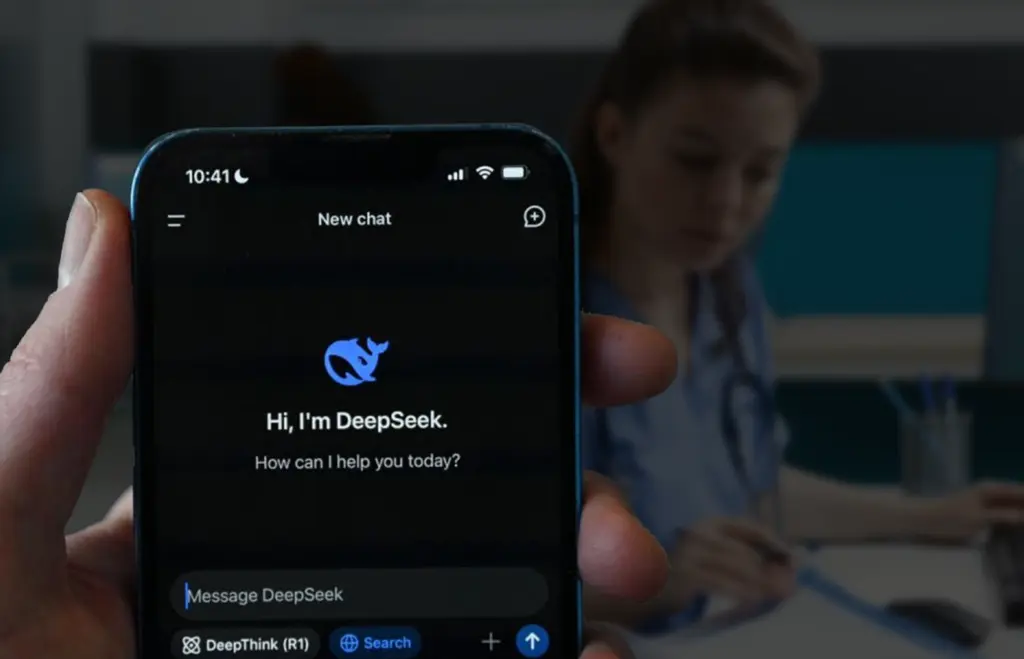
DeepSeek-Coder’s pricing model is designed to support medical software development, offering flexibility for businesses of all sizes. Its cost structure balances attainability with advanced functionality, making it competitive in healthcare.
1. Free Tier
- Offers basic AI coding facilities for free.
- Perfect for prototyping tools like small-scale medical diagnostics.
- Democratizes access to medical software development.
- Supports innovation in resource-limited settings.
2. Paid Tiers
Starts at $0.55 per million tokens and unlocks enhanced features such as:
- Real-time data processing
- Custom code generation
- Designed to scale with usage and project needs.
- Free trials are available to explore premium capabilities.
3. Enterprise Plans
Tailored for large healthcare organizations and includes:
- Advanced security and compliance tools
- Prioritize support
- Full-suite AI development capabilities
4. Competitive Advantage
Unlike ChatGPT’s fixed $20/month cost, this model offers:
- Greater pricing flexibility
- More developer-centric features for healthcare innovators
Developed at a fraction of the cost ($5.5M vs. OpenAI’s $100M), ensuring cost-efficiency without compromise
Why DeepSeek-Coder is Booming: Key Factors Driving Growth
DeepSeek-Coder’s rapid rise in healthcare stems from its innovative technology and strategic market positioning, disrupting the AI coding landscape.
1. Innovative Coding Algorithms
DeepSeek- Coder’s 671B- parameter model and 90.2% HumanEval precision deliver superior code generation. It accelerates medical software development for diagnostics and EHRs, outpacing rivals like CodeLlama.
2. Robust Investor Support
Backed by major venture capital, it fuels aggressive expansion, enhancing its healthcare capabilities. This confidence drives innovation, enabling features like real-time IoT integration for medical software.
3. Surging Healthcare AI Demand
The growing need for AI-driven medical software, from telemedicine to clinical decision support, boosts DeepSeek-Coder’s adoption. Its customization meets healthcare’s complex demands, unlike generalist models.
4. Global Market Expansion
DeepSeek-Coder’s presence in the U.S., Europe, Asia, and Africa, coupled with 5–6M global users, supports multilingual medical software development, addressing diverse healthcare markets.
On January 10, 2025, DeepSeek launched its free chatbot app grounded on DeepSeek- R1 for iOS and Android. By January 27, it had surpassed ChatGPT as the top free iOS app in the U.S., signaling a global AI race and contributing to an 18% surge in Nvidia’s stock.
Medical Software Development Challenges
DeepSeek-Coder has creative promise but stands to confront harsh challenges that will have to be solved before there is mass adaptation within medical contexts.
1. Concerns around Data Privacy
DeepSeek-Coder’s connection to Chinese servers sparks alarm at compliance with HIPAA and GDPR standards. Patient information’s sensitive nature and global transportation expose them to data leakages and judicial infringement, creating strong, privacy-centric implementations required in healthcare sectors.
2. Barriers within Regulation
Medical software has to meet stringent regulatory standards like FDA, EU MDR, and MHRA standards. DeepSeek-Coder, being open-source and highly flexible, does not have inherent mechanisms for model explainability, risk assessment, and clinical validation, and hence regulatory approval is difficult.
3. AI Hallucinations and Inaccuracies
DeepSeek-Coder, as other large language models, is able to produce misleading or made-up information. In a health context, the errors might cause misdiagnosis, inappropriate treatments, or harm to patients and thus rigorous human monitoring is unavoidable.
4. Cybersecurity Risks
A significant DDoS assault in 2025 revealed DeepSeek-Coder’s vulnerabilities, highlighting the importance of strong encryption, network segmentation, and threat detection particularly when utilized in EHRs or telehealth platforms.
5. Server Downtime and Reliability Issues
Repeated server failures and delays, users complain, break DeepSeek-Coder’s efficiency compromising its trustworthiness in mission-critical clinical settings. Medical software is required to have high availability and minimal downtime, especially during medical emergencies.
Opportunities in Medical Software Development with DeepSeek-Coder
Despite its challenges, DeepSeek-Coder presents powerful opportunities to transform the healthcare technology landscape.
1. Enhancing Medical Coding and Documentation
DeepSeek-Coder’s capability to automate ICD coding, clinical summaries, and radiology reports can greatly reduce clinician workload and administrative burden. It improves workflow effectiveness and patient care quality.
2. Enabling Clinical Decision-Making
When combined with expert validation, DeepSeek-Coder can assist in diagnosis suggestions, treatment plan generation, and literature summarization.
3. Speeding Up Drug Discovery and Genomic Research
Its natural language and coding abilities make DeepSeek-Coder a valuable tool for the analysis of biomedical literature, gene annotation automation, or drug repurposing support, accelerating innovation in medical research.
4. Enabling Localized, Secure AI Models
The architecture of DeepSeek-Coder can be adapted into localized deployments (e.g., PatientSeek), allowing offline or private server use. It addresses both privacy concerns and regulatory compliance while ensuring data sovereignty.
5. Promoting Open Innovation in Health AI
As an open-source tool it enables collaboration among developers, clinicians, and researchers worldwide. This fosters transparent model development, community-driven improvements, and cost-effective innovation in healthcare software.
The Future of DeepSeek-Coder in Healthcare
DeepSeek-Coder’s open-source, cost-efficient framework is set to revolutionize medical software, empowering global healthcare innovation. By enabling affordable, collaborative, and sustainable solutions, it addresses disparities and regulatory needs, shaping a transformative future.
1. Empowering Global Healthcare Equity
DeepSeek-Coder’s $0.55/million token API and open-source model allow developers in underserved regions to build affordable medical software, like diagnostic apps or EHRs, reducing healthcare disparities and enhancing access to quality care worldwide.
2. Fostering Open-Source Medical Innovation
Its open-source nature invites global collaboration, enabling developers to create tailored medical software, such as telemedicine systems or IoT wearables. Compliance with HIPAA and GDPR, accelerating patient-centric solutions for diverse healthcare challenges.
3. Driving Sustainable Medical AI
DeepSeek-Coder’s Mixture-of-Experts architecture supports scalable medical software, like real-time diagnostics, while aligning with Net Zero goals. This sustainability ensures long-term, eco-friendly healthcare advancements with minimal environmental impact.
BrainX Integrates AI That Works for Your Medical Software
BrainX empowers businesses to build medical software like DeepSeek-Coder’s projects. Its advanced natural language processing and code generation create precise EHRs, diagnostic tools, and telemedicine platforms. BrainX’s real-time processing, HIPAA-compliant security, and multilingual support enable global collaboration. With affordable, customizable solutions, BrainX accelerates healthcare innovation, ensuring patient-centric outcomes.
Visit BrainX Technologies to explore AI-driven healthcare solutions and join the medical software revolution.
The advent of ChatGPT marked a significant shift in artificial intelligence, but this industry has made its way across multiple fields since then. Besides its previous milestones in computer vision, AI has made breakthroughs in natural language processing (NLP).
Generative AI can understand and generate human language while extending its expertise to diverse data formats such as images, video, software code, and molecular structures.
This transformation marks a significant turning point in the tech industry. AI has extensively reshaped the future of software engineering. The census by Statista shows that there will be a surge of $126 billion by 2025. This blog will help you understand the benefits and perspectives of AI in software development to help you innovate and scale better.
What is AI in Software Development?
The Comptia Community has forecasted that the worth of global AI will increase to $407 billion by 2027. AI software development has become essential for enabling developers to perform various complex tasks effectively. Powered by high computational power and data storage capacity,
The procedure of AI software development necessitates integrating artificial intelligence into the core structure of an application. This process is a modern approach to simplify the complex tasks humans have performed in ancient times for problem-solving, reasoning, learning, perception, and language comprehension.
AI Software Development Process
Among the benefits and perspectives of AI in software development, the most prevalent is that it offers the following sequential stages for developers trying to excel in this field.
1. Problem Identification
The initial phase of AI software development involves defining the problem it will address and understand the requirements, objectives & tasks for automation.
2. Data Collection and Preparation
AI algorithms necessitate extensive data for learning and decision-making. Developers must gather, clean, and preprocess data to ensure relevance and quality.
3. Algorithm Selection
Developers must select appropriate AI algorithms, including machine learning, deep learning, and natural language processing, based on the problem and data.
4. Model Training
In this step, developers train the AI model using the prepared data. It involves feeding the data into the model and adjusting its parameters to improve performance.
5. Testing and Evaluation
After training the model, developers test it using separate datasets to evaluate its performance and accuracy. They may need to fine-tune the model or adjust based on the test results.
6. Integration
Once the AI model is trained and tested, it is integrated into the software application. This process involves connecting the model to the application’s user interface and backend systems.
7. Deployment and Monitoring
The final step is to deploy the AI-based software into production. Developers must monitor the software’s performance and make updates or other required improvements.
Benefits of AI in Software Development
Here are some of the benefits of AI in software development helping it transform industries.
1. Reduction in Human Error
Artificial Intelligence offers a key advantage in its ability to diminish errors while enhancing accuracy and precision. Each decision made by AI is rooted in past data and specific algorithms. With proper programming, these errors can be effectively eliminated.
2. Zero Risks
AI offers a significant advantage in enabling humans to delegate numerous risky tasks to AI robots. From defusing bombs to venturing into space and delving into the deepest ocean depths, machines with metallic bodies possess inherent resilience, allowing them to endure harsh environments. Furthermore, they exhibit precision in their tasks, assuming greater responsibility, and maintaining longevity without succumbing easily to wear and tear.
3. All-Time Availability
Research suggests humans are productive for 3 to 4 hours daily because they need breaks for work-life balance. On the other hand, AI operates tirelessly without breaks, processing information at a much faster rate than humans and executing multiple tasks simultaneously with precision. Furthermore, AI algorithms enable effortless management of tedious, repetitive tasks.
4. Tech Support
Several leading-edge companies leverage digital assistants to interact with users by reducing reliance on human personnel. Numerous websites employ digital assistants to provide requested content, enabling conversational searches. Some chatbots are designed to blur the distinction between human and machine interaction, making it challenging to discern between them.
5. Cost Efficiency
One of the most significant benefits and perspectives of AI in software development is its cost-effectiveness, even when building complex applications. They require fewer resources to complete tasks which saves a significant amount of time and finances. Artificial intelligence allows businesses to emphasize their budget on marketing, research, business development, etc.
6. Gateway to Innovations
The benefits and perspectives of AI in software development are tremendous because it has become the center stage of innovations. For example, while tools like OpenAI’s ChatGPT made headlines, the real story is AI quietly taking charge across industries. Now, software infused with AI intelligence is becoming commonplace, impacting our everyday lives.
7. Involvement in Daily Lives
20 years ago could you imagine asking your computer for instructions while planning a trip? Of course not! But all you have to do today is ask Google Maps, Cortana, Alexa, Siri, or OK Google to help you with finding locations, making calls, sending/receiving emails, and capturing/searching pictures. These are just a few examples of how AI-based solutions navigate our everyday lives.
8. Optimized User Experience
Utilizing AI to elevate user experience and customer satisfaction involves using its capabilities to discern trends in user behavior. A prime example is Netflix, which analyzes users’ data to uncover patterns and forecast content preferences. This personalized approach has been pivotal to Netflix’s success, enabling it to retain users and attract new ones by delivering tailored recommendations.
9. Advanced Security
Employing AI-powered security solutions empowers companies to fortify their software defenses. These solutions are designed to continuously monitor, detect, and respond to security risks in real-time, bolstering the resilience of software systems.
Examples of AI Transforming Businesses
Artificial intelligence has grown prominent in diverse business functions, from optimizing operations to improving decision-making, offering wide-ranging benefits across industries.
Real-world uses of AI in Ecommerce
Forbes predicts AI e-commerce to hit $16.8 billion by 2030. AI powers personalized marketing, automated customer service, operations, and security. Let’s explore its multiple implications in this industry;
1. Tailored Shopping Experiences
AI transforms shopping with personalized experiences. It can connect with machine learning algorithms to tailor product recommendations using browsing history, purchases, and social media.
2. AI Virtual Assistants
These AI VAs act as the initial point of contact for customer queries and offer immediate answers to frequently asked questions regarding products, services, and policies. The main purpose of these assistants is to enhance cost-effectiveness and productivity for businesses through automated replies.
3. Efficient Website Development
AI has the potential to employ the most affordable website builders. It has enabled entrepreneurs to create websites and establish a consistent brand identity without coding knowledge.
4. Prompt Fraud Detection
AI systems analyze purchasing patterns, user behaviors, and transaction data to detect anomalies that could signify fraudulent transactions.
5. Augmented Reality (AR) & Virtual Reality (VR)
Sephora’s makeup app allows individuals to virtually test out different makeup products, providing a realistic preview of how specific items like eyeliner or lipstick would appear on them.
Real-World Use Cases of AI in Education
Integrating AI in education is progressively transforming the learning and teaching experiences. AI’s implementation in this field encompasses various aspects, such as alleviating administrative tasks, developing interactive educational materials, and customizing individualized learning journeys.
1. Adaptive Learning
AI-driven adaptive learning customizes the educational journey for every student by adjusting content, speed, and challenge levels according to their strengths and weaknesses.
2. Automated Administrative Tasks
AI technology can manage repetitive tasks like grading assignments, monitoring student attendance, and addressing frequently asked questions from students.
3. Assistive Technology
The World Health Organization (WHO) has projected that the demand for assistive technology among individuals with cognitive, sensory, or mobility impairments will reach 3.5 billion by the year 2050. Text-to-speech software powered by AI can assist students with visual impairments, while speech recognition tools can help students with writing difficulties.
Real-World Use Cases of AI in Healthcare
According to Statista’s projection, the global healthcare market will be worth nearly $188 billion by 2030. The influence of artificial intelligence in the healthcare sector is significant and diverse, providing revolutionary progress in diagnosis, drug exploration, and advancement.
1. Testing & Monitoring
AI can analyze medical images like X-rays, MRIs, and CT scans with exceptional precision and speed by utilizing advanced algorithms and deep learning techniques. Paige’s advanced AI technology is poised to reveal the most profound mysteries of cancer and introduce a new era of diagnostic instruments that will ultimately preserve lives.
2. Drug Discovery
Software development is advancing the drug discovery and development process in the pharmaceutical industry every day with the help of AI and big data analytics. AIDDISON utilizes AI, machine learning, and Computer-Aided Drug Design (CADD) techniques for the virtual screening of extensive chemical spaces and provides tools for discovery and optimization.
Real-World Use Cases of AI in Finance
The benefits and perspectives of AI in software development are leading the way in financial innovation, such as using sophisticated fraud detection methods to outwit scammers, etc.
1. Fraud Detection
AI software development has changed the way of fraud detection. It can process & analyze transaction location, amount, frequency, and merchant type, to build a comprehensive understanding of normal customer behavior.
2. Risk Evaluation
AI and big data enhance loan approval by analyzing multiple factors beyond credit scores, like income stability and spending habits. They enable comprehensive financial assessments, benefiting individuals and companies in various financial endeavors.
Perspectives of AI in Software Development
- AI developers can automate specific tasks throughout the software development lifecycle. These tasks encompass code refactoring, bug resolution, testing, and deployment. Integrating automation can significantly enhance the efficiency and precision of the development process.
- AI software works better via machine learning, swiftly recognizing data patterns, and surpassing human abilities. User interactions fuel their evolution, making them smarter over time.
- AI-driven systems can interpret natural language and transform it into code. This allows developers to interact with software more intuitively either through voice commands or text input.
- AI can analyze user data and make predictions about future trends or behaviors. This empowers developers to design and develop highly efficient applications customized to meet the specific user’s needs.
AI Tools Gaining Popularity Among Web Developers in 2024
Copilot by GitHub
The main objective of this AI tool is to finish programming tasks. The tool was programmed using the Codex framework, which involved billions of lines of code. Its main functionalities consist of IDE integration, code completion, and test writing capabilities.
TabNine
TabNine is an AI coding tool that adapts to the given codebase by producing precise and contextually appropriate recommendations. It can generate extensive code blocks as well as individual lines of code. Notable features of TabNine include seamless integration with IDEs, efficient code completion, and a convenient link to the code repository.
CodeWhisperer by Amazon
The CodeWhisperer serves as a programming tool that is assisted by artificial intelligence. It offers several notable features, such as seamless integration with IDE, efficient code completion, and a convenient link to the repository where the code is stored.
Challenges of Utilizing AI in Software Development
- AI is an advanced instrument with the capability to execute numerous tasks. Nevertheless, to harness its complete potential, it necessitates the expertise and experience of a specialist. The primary prerequisite lies in the proficiency to articulate all input parameters accurately.
- A software development company must make significant investments in high-quality hardware. Upgrading equipment typically leads to improved performance of AI systems, resulting in accelerated project completion and shorter time-to-market for the final product.
- Professional tools in the software development industry are known for their high price tags. Cutting-edge AI and ML solutions come with a substantial cost for commercial usage. Nevertheless, these expenses are justifiable and reasonable. The efficiency and effectiveness of AI coding tools enable them to quickly recoup their initial investment, especially when utilized by proficient software engineers.
BrainX is Your Trusted Partner for AI Software Development
At BrainX Technologies, we specialize in providing comprehensive guidance to businesses throughout the intricate AI software development process. We combine cutting-edge technology and a customer-centric approach for customizing AI-enabled software solutions that align with your business goals. Our skilled team uses their profound understanding of artificial intelligence to execute your ideas for better growth, scalability, and innovation.